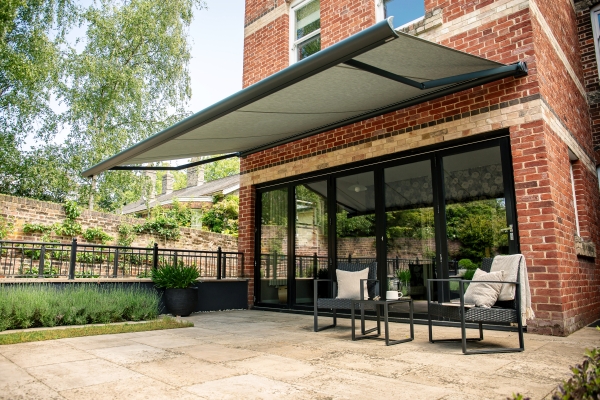
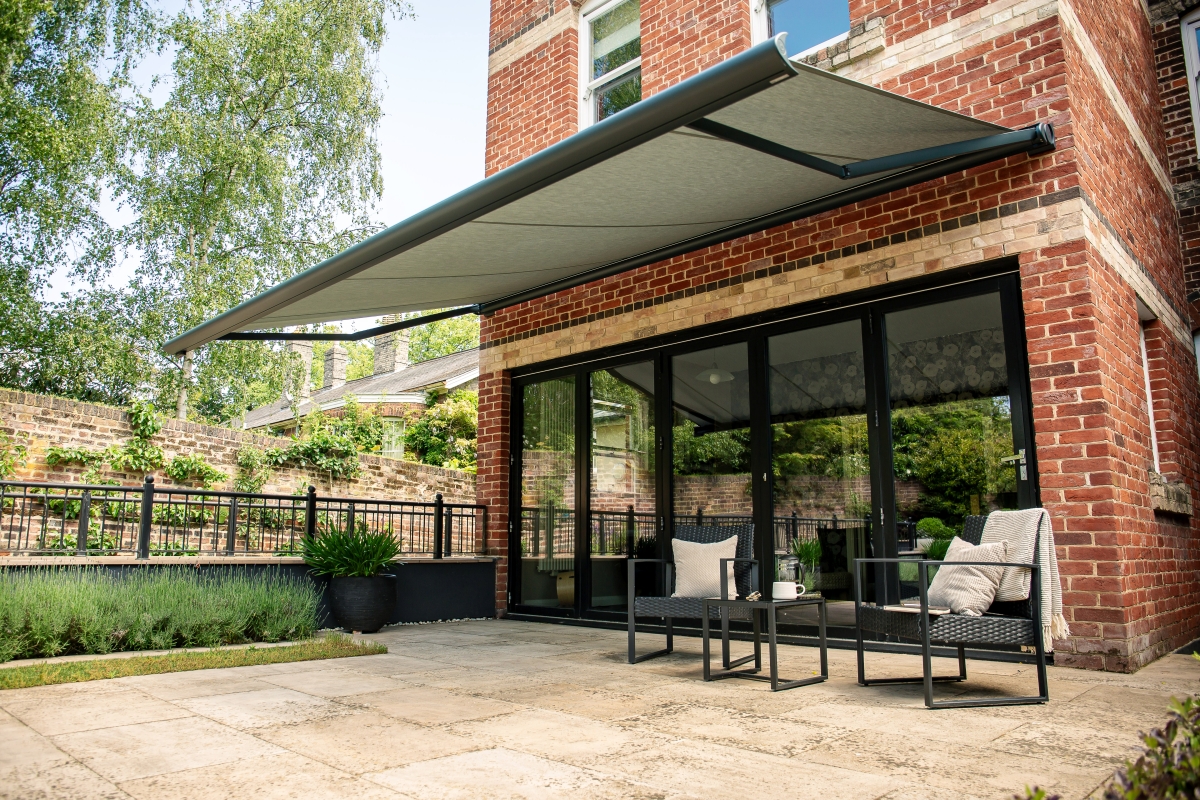
Will an awning survive the wind or will it be reduced to a pile of twisted metal at the first hint of a breeze? It is the first thing many buyers ask us, and it’s a fair question. An awning is a big, open sail-like surface sitting outside your home, so it is sensible to check how much wind it can cope with before you spend a penny.
The good news is that there is a recognised way to measure wind load capacity. This guide explains the awning wind rating system in plain English, shows where our awnings sit on the scale, and gives owners a clear rule of thumb for when to retract the awning.
The figures below reflect the current EN 13561 wind classification and the Met Office description of the Beaufort scale.
EN 13561 in plain English
EN 13561 is the European standard for external blinds and awnings. Among other things, it sets out how a product’s resistance to wind is tested and classified. In practice, it gives you an independent way to compare one awning with another, rather than relying on a manufacturer simply saying a product is “strong” or “wind-resistant”.
Here is what the wind class system tells you:
- What was tested: how the awning behaves under a measured wind load while fully extended
- How it is graded: Class 1, Class 2 or Class 3, with a higher class meaning greater wind resistance
- Why it matters: it turns a vague promise into a number you can check
Testing involves applying a defined load to the leadrail of the awning when it is fully extended, then assessing how the product performs under that load. Crucially, testing is based on the largest size available within the product range. This means the wind classification applies to the maximum size tested, rather than simply being a rating for a smaller version of the same awning.
This is an important distinction when comparing products. Some manufacturers may quote different wind classes for different sizes within the same range, with smaller awnings achieving a higher class than the largest size. It is worth checking exactly which size the published rating applies to, rather than assuming the highest quoted class covers every size.
One point worth knowing: a wind class describes a correctly installed awning in good condition. It is not permission to leave your awning out in a storm. We come back to that below.
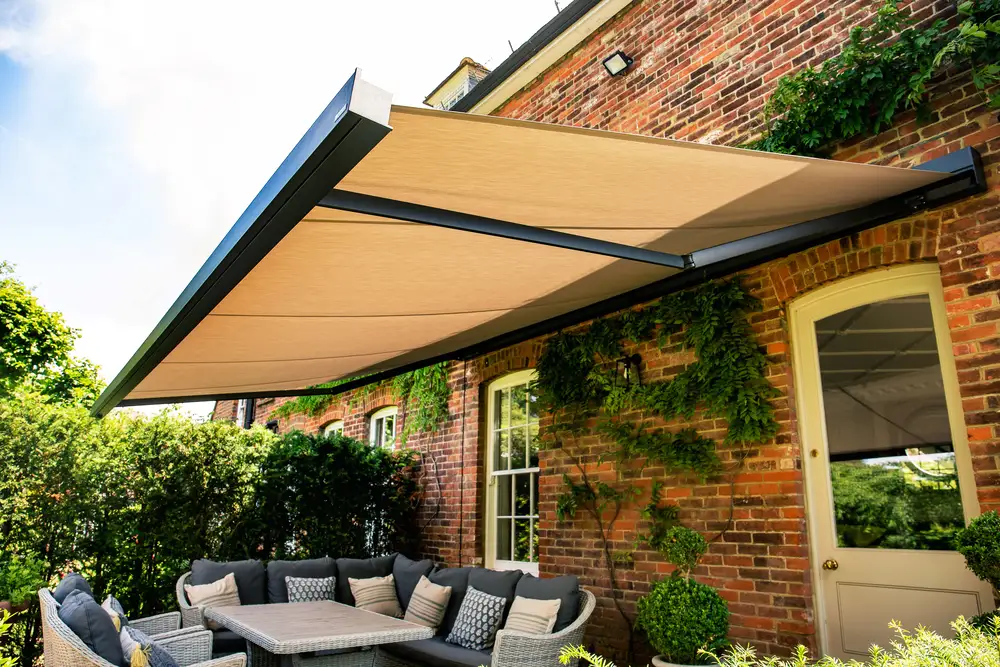
Class 1, 2 and 3: from gentle breeze to strong breeze
Each EN 13561 class lines up with a level on the Beaufort scale, the standard way of describing wind conditions. The Met Office guide to the Beaufort scale explains each level in detail.
Here is how the three classes compare:
- Class 1: Beaufort 4, around 17mph. A moderate breeze. Dust and loose paper lift from the ground, and small branches move.
- Class 2: Beaufort 5, around 24mph. A fresh breeze. Small trees in leaf begin to sway.
- Class 3: Beaufort 6, around 30mph. A strong breeze. Large branches move and umbrellas become hard to hold.
The mph figures are the upper end of what each class is designed to handle. Think of them as ceilings, not targets.
A few things to keep in mind when reading these numbers:
- Wind speed and wind gusts are different. A forecast of 20mph may include gusts well above that. Gusts are what put the sharpest strain on an awning.
- Each class is a step up. Moving from Class 1 to Class 2 to Class 3 means greater wind load can be taken before the structure is at risk.
- Exposure matters. A sheltered courtyard and a hilltop garden can feel very different in the same weather conditions.
If you are choosing an awning for an exposed spot, a higher wind class gives you a bigger safety margin. To find out the wind rating for your specific awning model, consult your product manual or contact your manufacturer directly; you can also check the official product page or specifications provided by your retailer for wind resistance details.
Where do our awnings sit on the scale?
Caribbean has been a second-generation, family-run UK manufacturer since 1987, and we design our external shading with British weather in mind. Every Caribbean patio awning is certified to at least Class 2, and our strongest models reach Class 3.
That means:
- No patio awning in our range falls below Class 2, which is Beaufort 5 and 24mph
- The higher tier reaches Class 3, which is Beaufort 6 and above 30mph
- All are rated for the retractable awning format, so you can shade your outdoor space in summer and retract it when conditions turn
In short, you do not need to accept a low wind rating in exchange for good looks or a reasonable price. Our available awning models show how this works in practice.
The Anguilla: Class 2 certified at 24mph
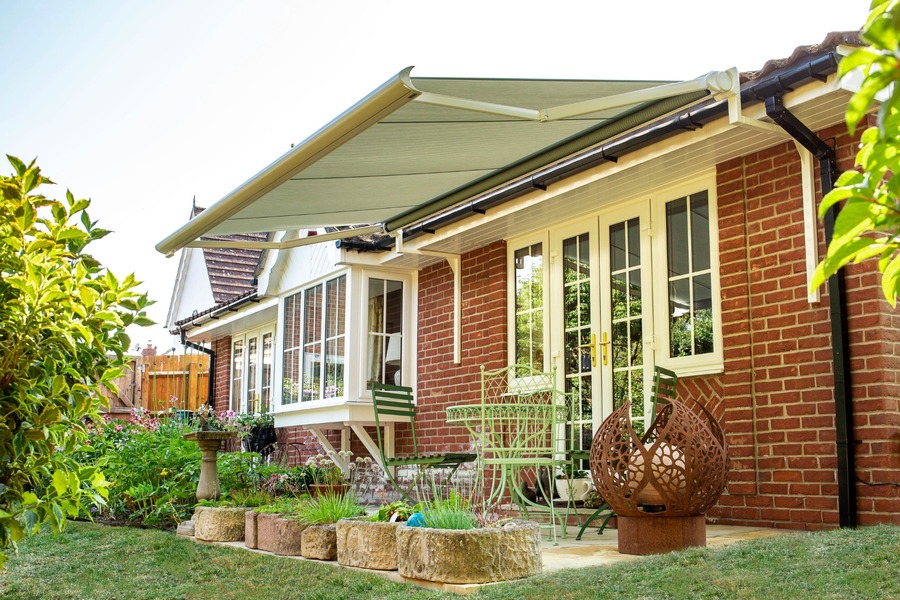
The Anguilla is certified to EN 13561 Class 2, which corresponds to Beaufort 5 and wind speeds of up to 24mph.
In everyday terms, 24mph is a fresh breeze. It is the kind of wind you will notice on a blustery afternoon, when small trees in leaf start to sway and garden furniture may need a second look.
The Anguilla suits:
- Homes with a reasonably sheltered patio or terrace
- Buyers who want dependable wind resistance without needing the highest class
- Households that are happy to retract the awning when conditions become properly unsettled
A Class 2 rating gives you real peace of mind for typical British weather, provided you follow the retraction guidance later in this guide.
The Tortola: Class 2 certified at 24mph
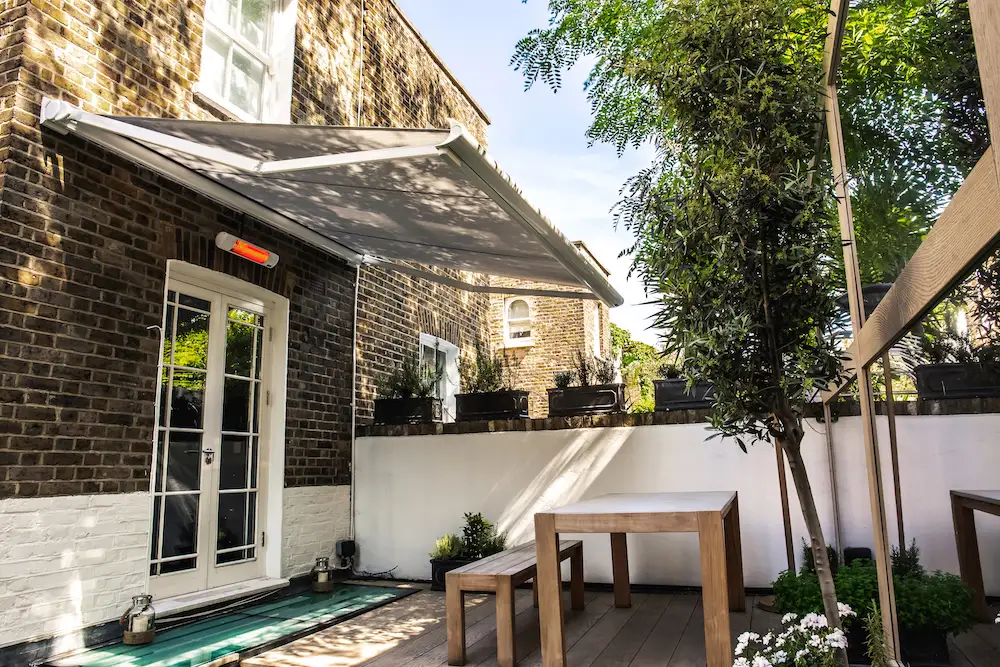
The Tortola motorised retractable awning is is our most popular residential retractable awning, and like the Anguilla, is certified to EN 13561 Class 2, which corresponds to Beaufort 5 and wind speeds of up to 24mph.
The Tortola suits:
- Homes with a reasonably sheltered patio or terrace where wall space is limited
- Buyers who want dependable wind resistance without needing the highest class
- Households that want the ability to retract the awning at the touch of a button when conditions become windy
The Cuba: Class 3 certified at 31mph
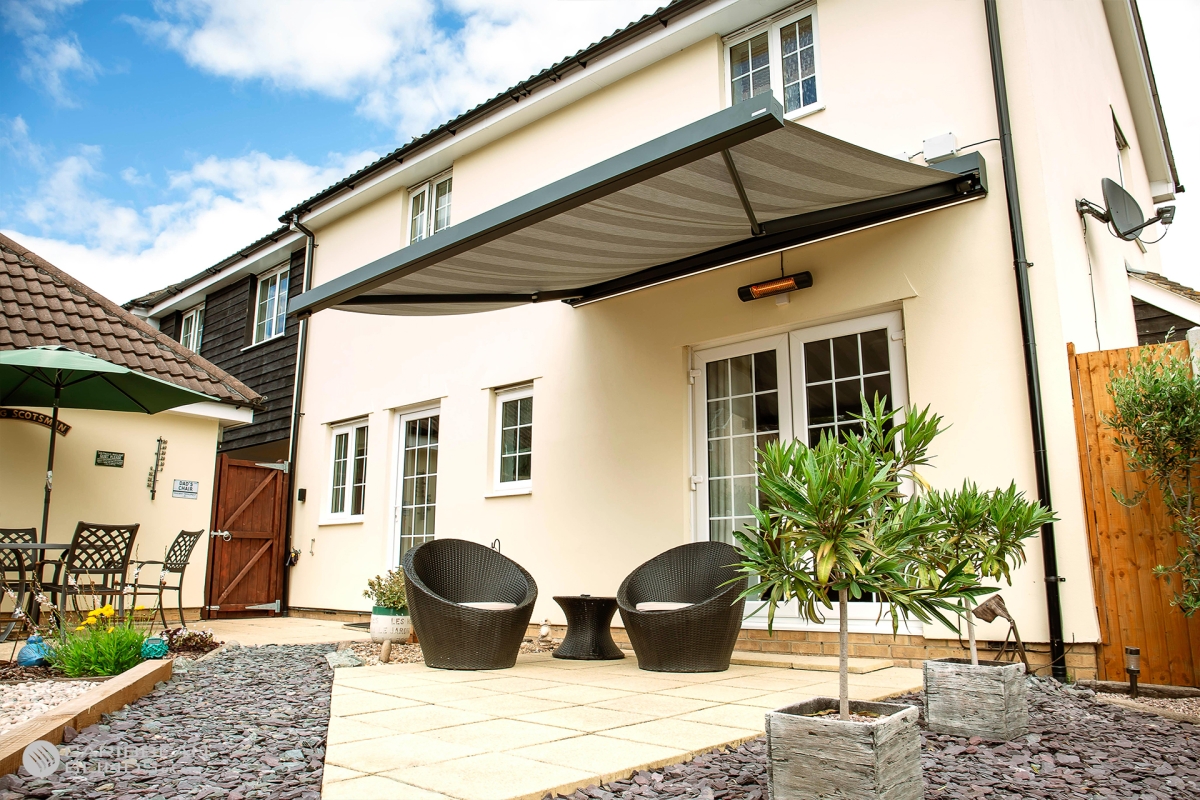
The Cuba is certified to EN 13561 Class 3, which corresponds to Beaufort 6 and wind speeds of up to 31mph.
That is a strong breeze, where large branches are in motion and everyday tasks outdoors become awkward. For an awning, it means a higher tolerance for windy conditions, and a stronger position if you live somewhere more exposed.
The Cuba suits:
- Gardens on open sites, hillsides or coastal areas
- Larger awnings, where the surface area takes more wind load
- Buyers who want the highest wind resistance in our patio range
If you are unsure which model fits your home, the easiest way to decide is to describe your site to us. Wind exposure, the size of the awning and the direction your patio faces all make a difference.
Know when to wind it in: your retraction rule of thumb
This is the part every owner should read. A wind class is a safety limit, and staying well inside it is the best way to protect your awning.
The simplest rule of thumb is to watch what the wind is doing around you:
- Small branches moving: keep an eye on conditions. This is roughly Beaufort 4.
- Small trees swaying: retract your awning, particularly if you are close to your model’s limit. This is roughly Beaufort 5.
- Large branches in motion: the awning should be retracted already. This is Beaufort 6 and above.
You should also retract your awning:
- When a storm or high winds are forecast, even if it feels calm at the moment
- When you are leaving the house for the day, if strong winds are possible
- During heavy rain or snow, as standing water and weight can put extra strain on the fabric and arms
- At night in windy conditions, when nobody is around to react
A useful habit is to check the forecast for wind gusts, not just average wind speed. Gusts are often noticeably higher and are the biggest cause of wind damage to awnings.
Consider a wind sensor
If you would rather not rely on remembering, ask about a wind sensor that is suitable for higher wind conditions. These devices monitor wind speed and can prompt a motorised awning to retract automatically when it rises past a set point. For anyone who is out at work all day, this is one of the most sensible proactive measures you can take. However, it should be noted that a wind sensor is not a failsafe device.
Getting the most from your awning’s wind resistance
The class on the label is only part of the picture. Three things decide how well your awning performs in high winds over the years.
Proper installation
A certified awning still needs to be fixed to a sound wall with the right brackets. A good rule of thumb is that the pitch of the awning also matters. A steeper pitch changes how gusts catch the fabric, so it should be set correctly at installation and not adjusted casually afterwards. Proper installation is the foundation of reliable wind resistance.
Regular maintenance
A quick check once or twice a year keeps things running as they should:
- Clean the fabric and frame gently with mild soap and water
- Check the arms and mechanism for smooth operation and lubricate the joints (pins where the arm connects to the cassette and leadrail) plus in the centre of the arm itself
- Make sure the awning retracts fully and sits tightly when closed
Regular maintenance catches small issues before they become costly ones.
Realistic expectations
No awning is designed to stay out in a gale. Treat your awning as you would a large umbrella: brilliant in the right conditions, and best put away when the weather turns.

Making an informed decision
Understanding your awning wind rating helps you make an informed decision about which model to buy and how to look after it.
The key points to remember:
- EN 13561 sorts awnings into Classes 1, 2 and 3, matching Beaufort 4, 5 and 6
- The equivalent speeds are around 17mph, 24mph and 30mph
- Every Caribbean patio awning is certified Class 2 or Class 3
- The Anguilla & Tortola are Class 2 at 24mph, and the Cuba is Class 3 at 31mph
- Retract your awning when small trees start to sway, and always when strong winds are forecast
Whether you are still choosing or already own an awning, a short conversation can settle your questions about wind exposure, wind load and the right model for your home.
Talk to Caribbean
We are a multi-award winning, family-run UK manufacturer, working with homeowners, commercial clients, contractors and the trade. If you would like advice on wind ratings or help choosing an awning, our team is happy to help.
- Online contact form: cbsolarshading.co.uk/contact-us
- Phone: 0344 800 1947
- Email: info@cbsolarshading.co.uk