
Our MD Stuart Dantzic argues that the Environmental Investigation Agency’s latest report should mark a turning point in how the UK tackles overheating.
The Environmental Investigation Agency’s latest report, UK Cooling Policy in a Warming World, should prompt a fundamental rethink of how the UK tackles overheating. As our climate continues to warm, relying on air conditioning alone is neither sustainable nor economically viable. Preventing buildings from overheating in the first place has to become the priority.
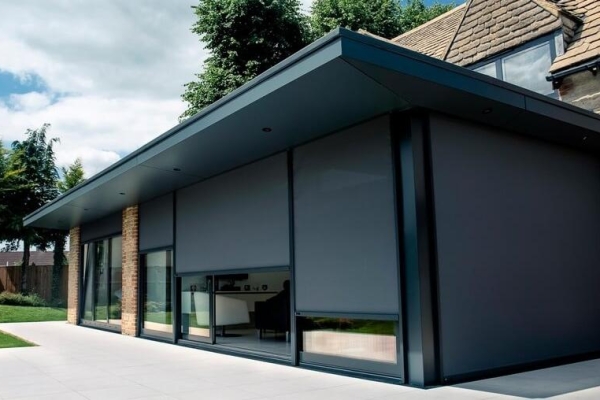
The report’s call for a National Cooling Action Plan rightly places passive cooling measures ahead of mechanical cooling. That mirrors the recently published Ladder of Cooling from ES-SO, which identifies external shading as one of the most effective ways to reduce solar heat gain before active cooling is ever considered.
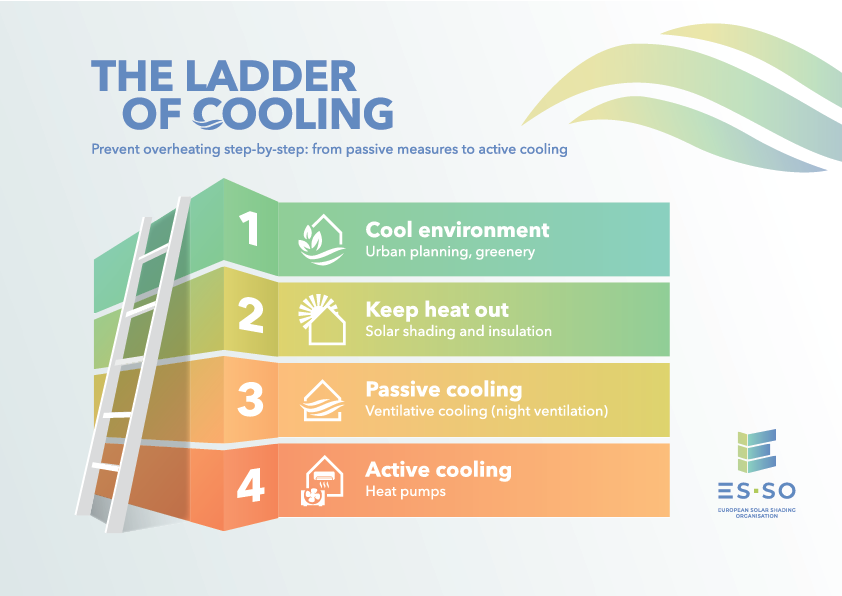
We wouldn’t think of heating a building without first insulating it, so why are we still discussing cooling buildings before preventing excessive solar heat gain?
The report also raises some important questions for everyone involved in the shading industry:
- Have we become too dependent on mechanical cooling instead of addressing the root causes of overheating?
- Should passive measures such as external shading become a standard part of building design rather than an optional upgrade?
- Is it time for Building Regulations and retrofit programmes to give external shading far greater prominence?
- Should the industry adopt a genuine passive-first approach to overheating, in the same way that fabric-first transformed energy efficiency?
As Vice President of the British Blind and Shutter Association (BBSA), I’m proud of the work being done to strengthen the evidence for external shading. Robust research is essential if we’re to change the way buildings are designed and retrofitted.
Current studies at Loughborough University, using matched test houses, are demonstrating how different forms of external shading reduce overheating. Earlier research on matched London flats found that external shading reduced peak indoor temperatures by as much as 19.5°C during periods of hot weather.
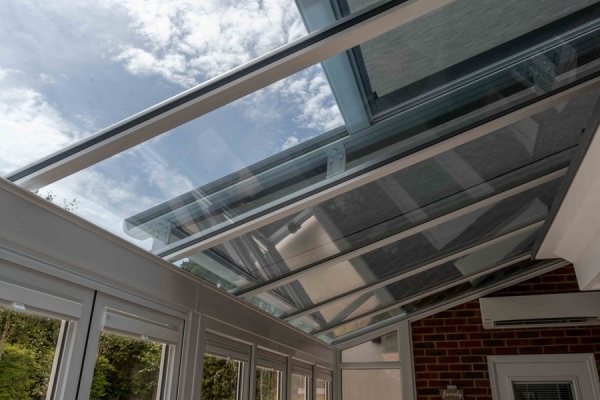
One point that is often misunderstood is that external shading doesn’t cool a building. It prevents the building from heating up by stopping solar radiation before it passes through the glazing. That’s a crucial distinction.
It also explains why user behaviour, and increasingly intelligent automation, are so important. External shading only delivers its full benefit when it is deployed at the right time and in the right position.
The EIA report makes one thing abundantly clear: tackling overheating cannot rely on air conditioning alone. If the UK is serious about creating buildings that are fit for a warming climate, we need to stop treating external shading as an optional extra and start recognising it as an essential part of building design and retrofit. A genuine passive-first approach will reduce energy demand, improve comfort and create buildings that are better prepared for the hotter summers that now lie ahead.