
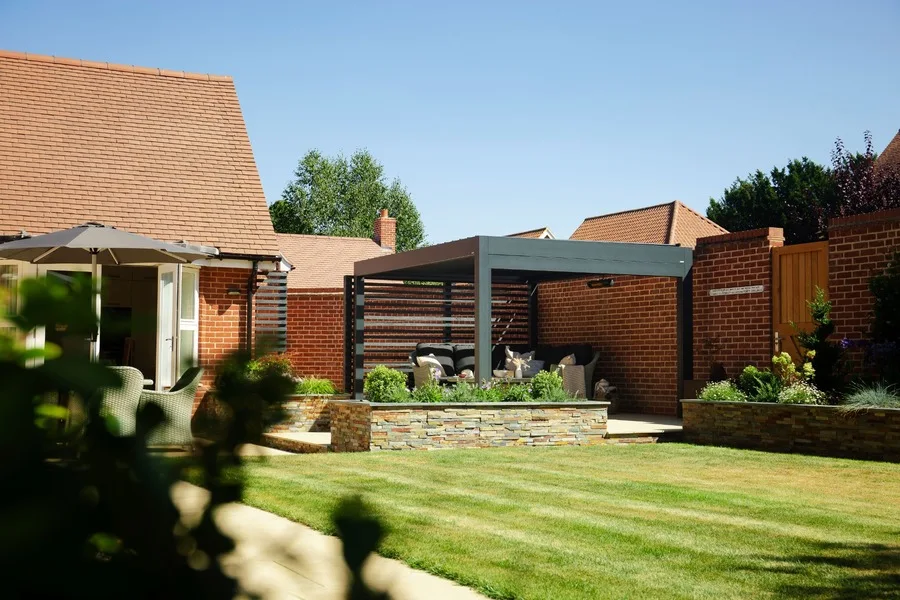
The modern pergola is a real game-changer in terms of how a garden can be used to its full potential. It turns a simple outdoor space into somewhere more defined for dining, shade or shelter, becoming a focal point by default. However, before any pergola installation begins, one question tends to come up early: do pergolas require planning permission?
In the UK, the answer is mostly reassuring. Most pergolas fall within permitted development rights, meaning planning permission is not usually needed. Even so, the detail matters. Positioning, height limits, proximity to the property boundary and the type of home can all affect whether approval is required from the local authority.
Getting this right at the start helps avoid delays, design changes and unnecessary planning permission applications later on.
Permitted development rules for pergolas
Most garden pergolas are treated as permitted development, provided they stay within set planning rules for outdoor structures.
A pergola will usually comply when:
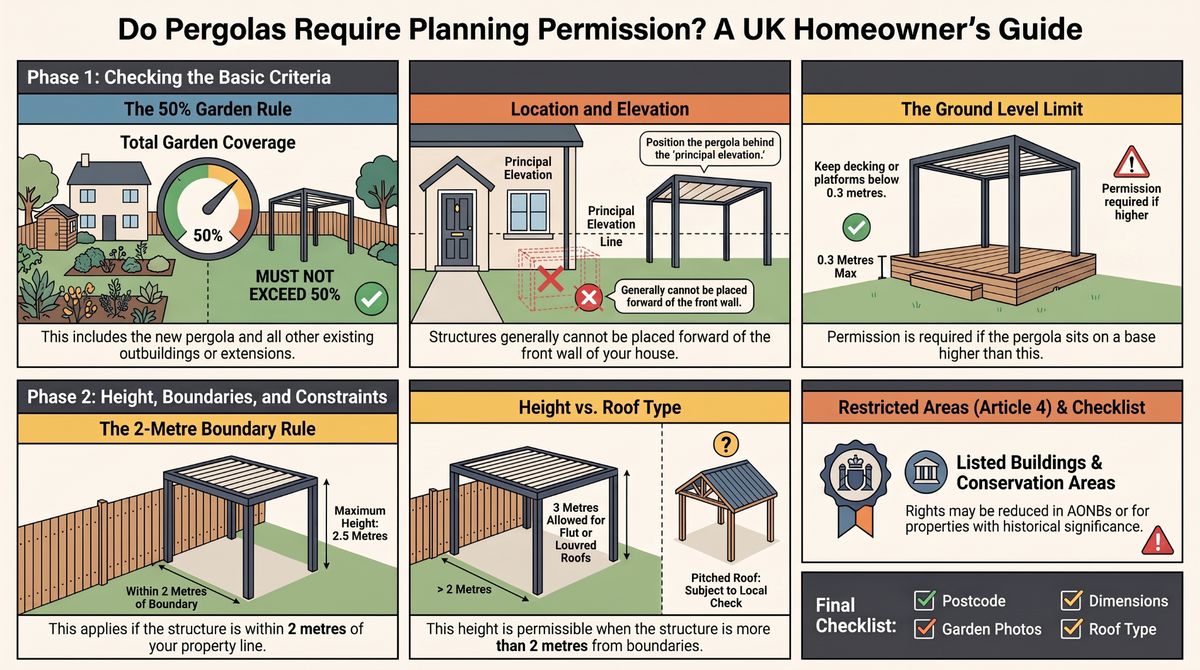
- total garden coverage of all garden structures does not exceed 50 per cent of the original house
- it is not positioned forward of the principal elevation or front of your house
- it is not placed on raised decking, balcony or veranda above 0.3m
- the property is a house, not a flat or maisonette
- no additional restrictions apply through local planning controls
This applies to freestanding pergolas and many attached pergola designs. In the majority of cases, these conditions mean planning permission is not required.
Height limits and boundary rules
Height is one of the most important planning rules when assessing a pergola project.
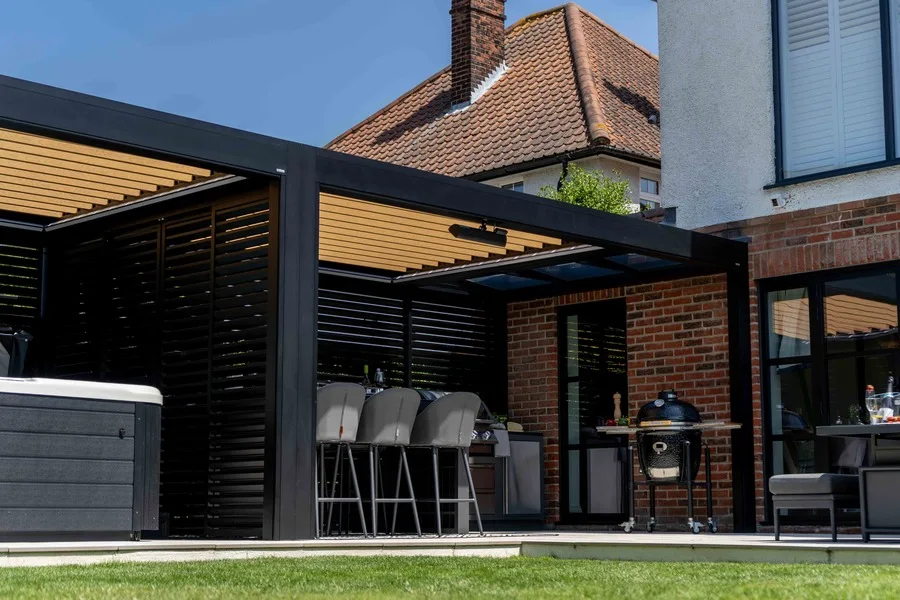
Where a pergola sits within 2 metres of the property boundary, the maximum height is generally 2.5 metres. Where it sits further away, a flat or louvred roof pergola can often reach up to 3 metres, with pitched roof designs allowed higher in certain circumstances.
These limits influence:
- side of your house installations
- rear garden layouts and outdoor space planning
- freestanding pergolas close to boundaries
- sight lines towards neighbouring properties
Accurate measurements are important here, as even small differences can affect whether permitted development applies.
Conservation areas, listed buildings and extra restrictions
Some homes fall under additional planning constraints. If a property is within a conservation area, an area of outstanding natural beauty or subject to Article 4 directions, permitted development rights may be reduced or removed.
Listed buildings and listed property types often require listed building consent as well as potential planning permission, depending on the impact of the pergola structure. In these cases, local council assessment is more detailed, with attention to architectural significance and how the change affects the wider setting.
These situations can involve more detailed planning rules and, in some cases, additional approvals from the local authority.
What to prepare for a quick assessment
A fast planning check is usually straightforward if the right information is available from the start.
Useful details include:
- postcode of the property
- photos of the garden and proposed location
- approximate pergola dimensions
- distance from the property boundary in metres
- roof type such as louvered roofs or pitched roof
- whether the pergola is freestanding or attached
With this, a local planning office or planning advisor can quickly assess whether the pergola falls within permitted development or needs planning permission.
Planning Portal guidance and next steps
The Planning Portal remains the main reference point for UK planning rules and development limits. It gives a clear overview of permitted development, although site-specific factors still matter.
If there is any uncertainty, a quick conversation with the local planning authority can provide clarity before committing to installation. For more complex projects, especially those involving additional restrictions, a site survey is often the simplest way to confirm the correct route forward.
- For more information about our range of pergolas, contact us here.