
A compact patio can be one of the most enjoyable aspects of a home, but only if it is planned with care. Limited depth, tight boundaries and overlooked settings require precision. The right awnings for small patios should deliver reliable shade, effective UV protection and shelter from light rain without overwhelming the exterior of your house. When properly specified, a patio awning becomes a practical extension of your home.
Working within tight dimensions
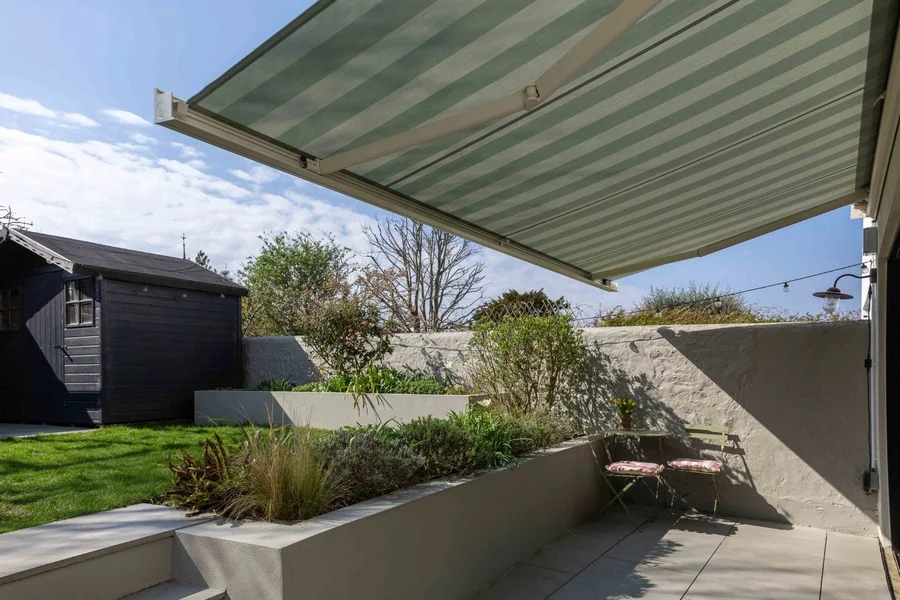
Small patios often present challenging constraints. Outward-opening doors reduce usable projection. Furniture must sit neatly while preserving a clear walkway. Neighbouring windows may affect privacy and relaxation.
While it can be tempting to choose the deepest extension available, excessive projection on a shallow patio may reduce headroom at the front of the awning and make the outdoor space feel compressed. Measure from the wall to the furthest realistic furniture position and allow space for chairs to move comfortably. For many compact layouts, a projection between 2.0m and 2.5m provides ample shade without crowding the patio.
Both the Anguilla and Tortola patio awnings from Caribbean Blinds are designed with a slim, fully enclosed cassette. This cylindrical casing protects the awning fabric and mechanism when retracted, preserving durability and longevity while remaining discreet on smaller façades.
A variety of sensors can be integrated with the awning motor, with a wind sensor being the most common and recommended. This device measures the wind speed acting on the awning and automatically retracts it during strong gusts, helping to protect both the awning and your property from damage.
Pitch, headroom and light levels
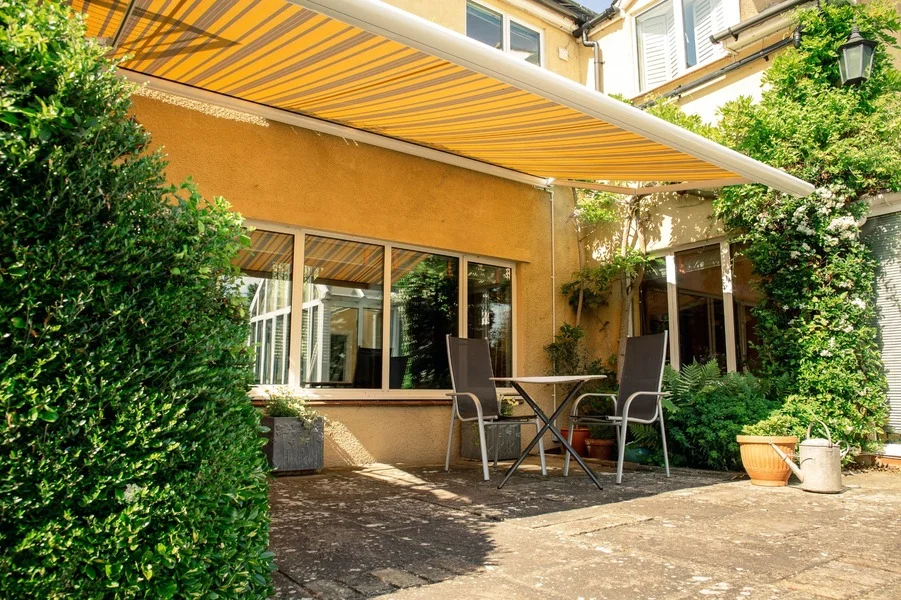
Correct pitch is essential for performance. Retractable awnings can be adjusted between 0 and 45 degrees. A minimum fall of 14 degrees is required for rainwater run-off, yet on a compact patio too steep a pitch may reduce head clearance.
Balancing fall and headroom ensures comfort beneath the canopy while allowing water to disperse during light rain. By intercepting direct sunshine and filtering UV rays before they reach glazing, patio awnings also help moderate light levels inside the adjoining living space.
Layouts that maximise usability
Bistro setting
A two-seat table centred beneath the awning creates a defined dining spot without clutter. Keep furniture proportional and aligned parallel to the wall. Electric awnings allow shade to be extended precisely over the table at the touch of a button, then retracted when more daylight is preferred.
Narrow pathway
Where the patio acts as a route to the garden, position seating along one side and retain a clear passage. The Tortola model, operated via remote or app control, makes it simple to adjust coverage as the sun shifts across the day.
Shallow step-out
On very limited patios, treat the awning as a protective overhang. A modest projection can create a comfortable place for morning coffee while maintaining openness.
The Anguilla, manually operated as standard with the option to upgrade, is well suited to smaller installations. Its robust spring-loaded arms maintain fabric tension at every position, and its compact cassette dimensions make it ideal where wall space is restricted.
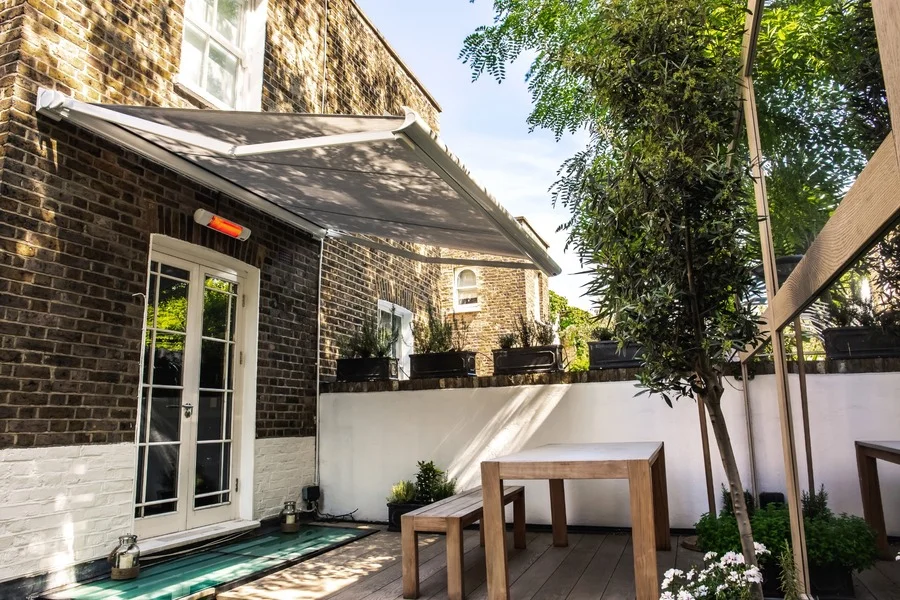
Side coverage for privacy and low sun
Overlooking and low evening sun can disrupt comfort. A drop valance fitted to the front of the awning provides additional shade when the sun sits lower in the sky, extending UV protection later into the day. Adjacent fences and trellises could also provide side shade, particularly in winter when the sun is lower.
Fabric, colours and common mistakes
High-quality awning fabric supports durability and low maintenance. Solution-dyed acrylic fabrics resist fading from UV rays and repel light rain, maintaining appearance over time.
Colour influences comfort as well as style. Lighter colours reflect heat and soften brightness beneath the canopy, while deeper tones create a stronger architectural statement against the exterior of your house.
Avoid overspecifying projection, ignoring wind exposure or setting pitch too shallow for drainage. Thoughtful sizing ensures the awning complements the patio rather than overpowering it.
- For more information about our range of patio awnings, contact Caribbean Blinds here.