Choosing between a manual and a motorised patio awning comes down to how you use your patio, how large the unit needs to be and how much convenience you want day to day. Both options are retractable awnings designed to extend your outdoor space and improve outdoor comfort. The difference lies in how they operate, what they cost and how well they suit different homes and weather conditions.
So let’s get into some brief definitions: a manual awning uses a hand crank and gearbox. Turning the handle rotates the roller tube and extends the fabric. It is a straightforward mechanical system with few components and no electrical wiring. A motorised awning replaces manual cranking with electric motors hidden inside the roller tube. It operates via remote control, wall switch or smartphone app, delivering effortless operation at the push of a button.
Cost and convenience
For many homeowners, upfront cost is the first deciding factor. A manual retractable awning is generally cheaper to buy and install because there are fewer electrical components and no power routing requirements. For smaller outdoor areas or occasional use, that can make it an attractive option.
A motorised awning costs more initially, but offers far greater ease of use. There is no physical effort required, making it ideal for larger awnings, daily operation or people with limited mobility. The touch of a button is quicker and more convenient than manual operation, particularly during changing weather conditions. Many homeowners find they use their awning more often simply because operation is so easy.
Size and suitability
Size is one of the biggest considerations in the manual vs motorised awnings debate. A manual awning works well for compact patios and smaller projections where manual effort remains manageable.
For wider spans, however, manual cranking becomes harder work. Using a hand crank on a large awning every day can quickly become inconvenient. In most cases, motorised systems are the ideal solution for awnings over three metres wide or for outdoor living spaces used regularly.
Motorised control also makes it easier to create a comfortable outdoor space without interrupting daily routines. Instead of avoiding the awning because it feels cumbersome to operate, homeowners can respond instantly to sun exposure, glare or light rain protection needs.
Caribbean awning options
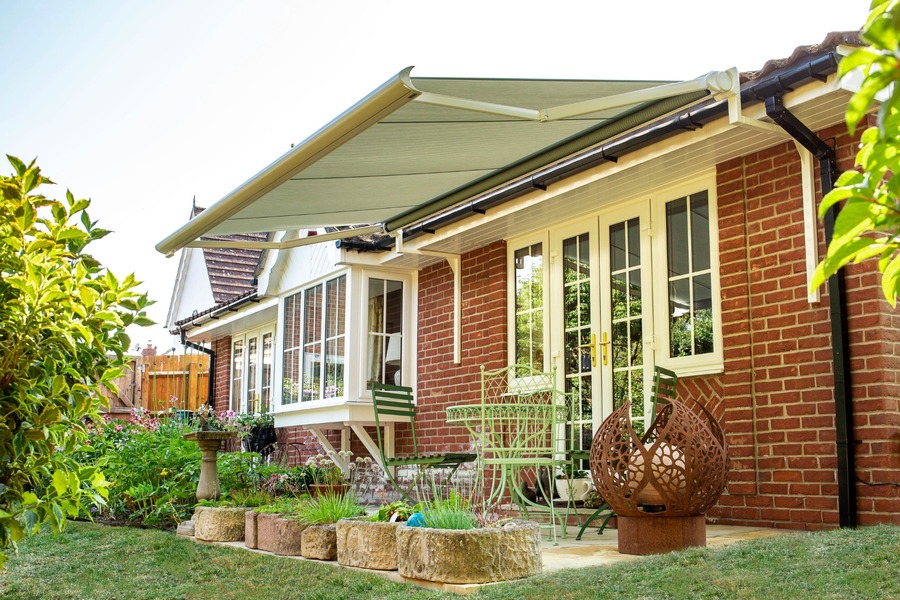
Caribbean offers several durable awnings suited to different outdoor living spaces and requirements.
The Anguilla Awning is ideal for smaller patios and terraces, with the choice of manual operation or motorised remote control. It features a full cassette casing, water-repellent fabrics and optional wind sensors, LED lighting and infra-red heating.
The Tortola Awning includes motorised remote control (with optional app control), making it well suited to homeowners looking for smart features and easy adjustments.
For larger outdoor areas, the Cuba Awning spans up to 14 metres wide and provides enhanced wind resistance for more exposed locations.
Weather protection and sensors
British weather is unpredictable, so weather protection should always be part of the decision. Wind sensors can automatically retract a motorised awning during high winds or strong winds, helping to protect the framework and fabric. Sun sensors and weather sensors can also adjust the awning automatically in response to direct sunlight and changing weather conditions.
This advanced automation is one of the biggest advantages of a motorised awning. It reduces the risk of accidental damage and helps maintain outdoor comfort without constant attention from the homeowner.
Manual systems rely entirely on the user noticing weather changes and retracting the awning in time. This isn’t always practical, especially if the property is unattended.
Reliability and upkeep
A manual awning has fewer moving parts and typically requires less maintenance. Aside from regular cleaning and occasional checks of the mechanical components, upkeep is relatively straightforward.
Motorised systems involve more advanced technology, but modern electric motors are designed for reliable long-term use. Professional installation is important because the electrical wiring, mounting position and fixings all affect performance and durability.
Routine care is simple. Regular maintenance should include cleaning the fabric, checking brackets and testing sensors and controls. Done properly, both manual and motorised systems can provide years of dependable weather protection.
Common mistakes to avoid
One of the most common mistakes is choosing a manual awning for a large installation. What seems cost-effective initially can become frustrating once daily manual effort is involved.
Incorrect mounting height is also common. An awning fixed too low can restrict headroom, while one installed too high may provide poor shade coverage. This is why professional installation matters.
Which is the right awning?
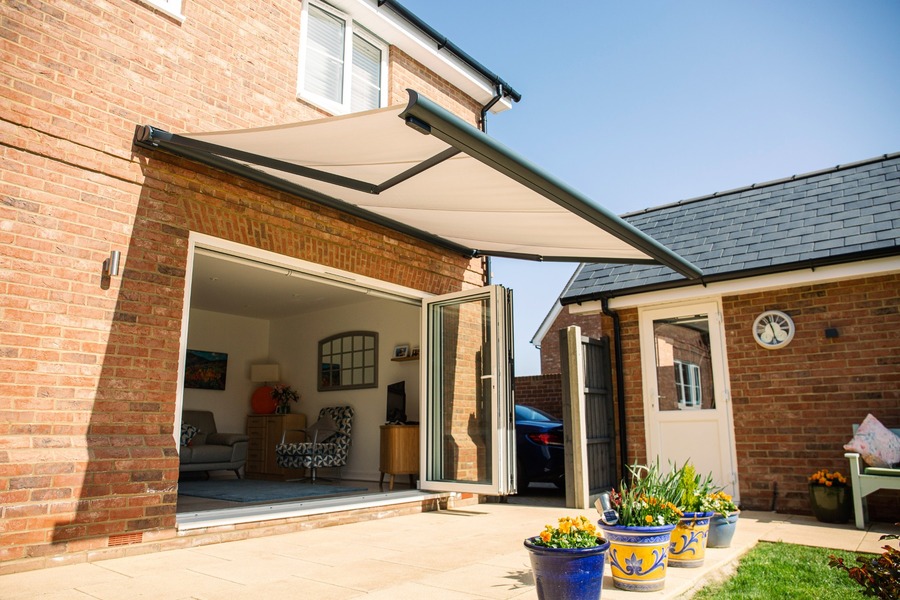
For smaller patios, occasional use and lower upfront cost, a manual awning can be the right choice. For larger outdoor space applications, frequent use and maximum convenience, a motorised awning is usually the better long-term option.
Both systems improve outdoor comfort, reduce glare and help protect against harmful UV rays. They can also support energy efficiency by limiting direct sunlight entering the home, reducing reliance on air conditioning during warmer months and helping control energy bills.
If you are deciding between manual and motorised awnings, Caribbean can help you choose the right awning for your property. Provide details about your patio size, wall type and exposure to various weather conditions to receive tailored advice on the best awning solution for your home.
- For more information about our awnings, contact us here.