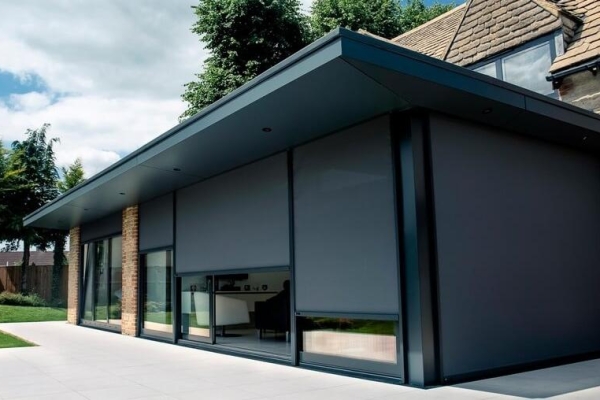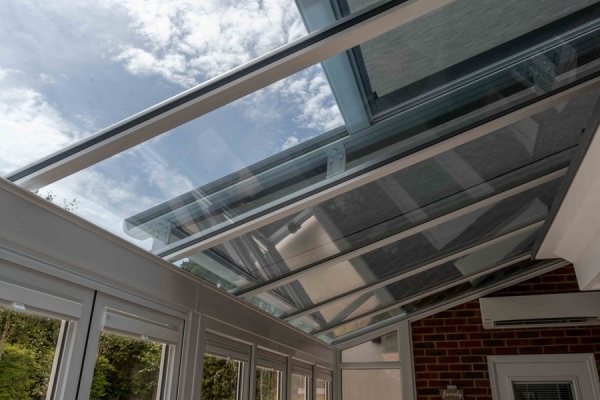


A pergola can radically change how a garden is seen and used, but the outcome on installation day is usually decided long before anything arrives on site. Base conditions, electrics, drainage and access all need proper prep. When those four areas are handled well, the installation tends to run cleanly and the finished structure behaves as intended.
This guide sets out what to check and why it matters, based on what installation teams consistently see across UK sites.
Start with the base
A pergola is a substantial aluminium structure. Depending on size and specification, it typically weighs around 400 to 500kg. That load is distributed through the posts, usually around 100 to 125kg per upright, which means it can be supported on a range of ground types when the base is suitable.
An existing patio can often be used, provided it is in good condition. The slabs or tiles must be solid, intact and free from cracks. If this is the case, the structure can sit directly on the surface. Posts are then fixed through concealed base plates using resin bonded anchors. These are threaded steel rods set in resin, creating a strong, stress-free bond with the base material. They are widely used in structural steel applications such as columns and railings because they provide reliable long-term holding power.
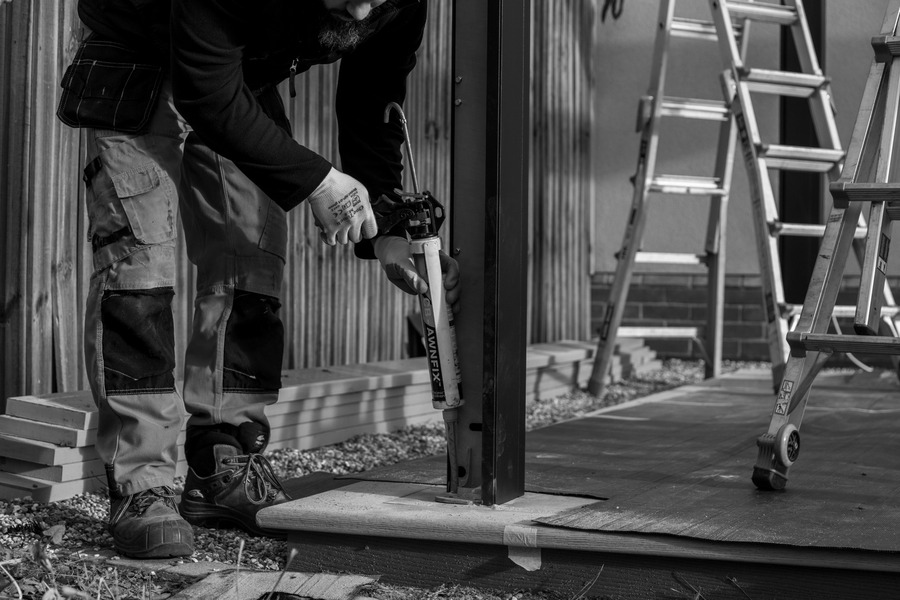
If the surface is not solid, such as loose paving, decking or grass, small concrete pads are required beneath each post. These are usually around 400 to 500mm square and at least 150mm thick. The same resin anchor method is then used to secure the posts to the pads.
The key principle is stability. If the base moves, flexes or sounds hollow, it is not suitable without preparation work.
Levelling the structure
Pergolas can sit on unlevel surfaces – in fact, most bases won’t be level because they will have a fall to allow for rainwater run off. The pergola will need to sit level, but posts can be adjusted by cutting during the installation process or through a level adjustment on the base plate, depending on how much fall there is on the patio. Drainage from the structure should always be away from the property.
Plan electrics in advance
The pergola will need power for its motorised roof and any options including lighting, so electrics need to be in place before installation day. This is one of the most common causes of delay.
Think about how the space will be used. Lighting supports evening use. Heating extends comfort into colder months. Motorised roof and screen systems require a reliable power supply and clear cable routing back to the main feed.
In most instances the power supply is a 13 amp feed which could be an external socket/spur adjacent to the structure’s location, or a feed that is routed and runs into one of the posts. Heaters need a 13 amp feed each, a major consideration if you’re planning to add heaters now or in the future.
Even if only basic features are being installed at first, it is worth allowing for future additions at the planning stage.
Think through drainage
A pergola roof manages rainwater through integrated channels that direct water into the posts and away from the structure. That system only works properly if the surrounding ground is prepared to receive and move water away.
Issues tend to arise where patios already hold water or slope towards the house. If water collects near the base of the posts, it can create persistent damp areas that are difficult to resolve after installation.
The aim is straightforward. Water should move away from both the structure and the building. If the site does not naturally achieve that, adjustments may be needed before installation begins.
Drainage is easy to overlook, but it becomes obvious during heavy rain.
Make access straightforward
Installation involves large aluminium sections and careful lifting, so access matters more than most people expect.
Check the full route from delivery point to installation area. Narrow side passages, tight gates and low overhangs can slow progress or make handling difficult. The same applies to overhead branches or garden structures that reduce clearance.
Clear the area before installation day. Move furniture, planters, storage and anything that could obstruct movement. Even small items can slow work if they are in the wrong place.
Parking and unloading space should also be considered. A clear route always helps the installation run more smoothly.
Common issues seen on site

Most problems come from a small number of avoidable factors, including:
- Pooling water around the base usually points to poor drainage or incorrect slope.
- Restricted access can slow installation and increase handling risk.
- Poor cable planning often leads to visible wiring or additional work if upgrades are added later.
- Unstable or uneven bases can affect alignment and long-term operation.
Each of these can be avoided with a proper site check before installation is booked.
Simple checklist before survey or install
- Base is solid, either an existing patio or prepared concrete pads
- Surface is level and stable
- No cracks or movement in existing slabs or tiles
- Drainage directs water away from posts and the house
- Adequate power supply is available for the roof and selected options including heating
- Cable routes are planned and accessible
- Clear access for installers and materials
- Garden area is free from obstructions
Ready to move forward
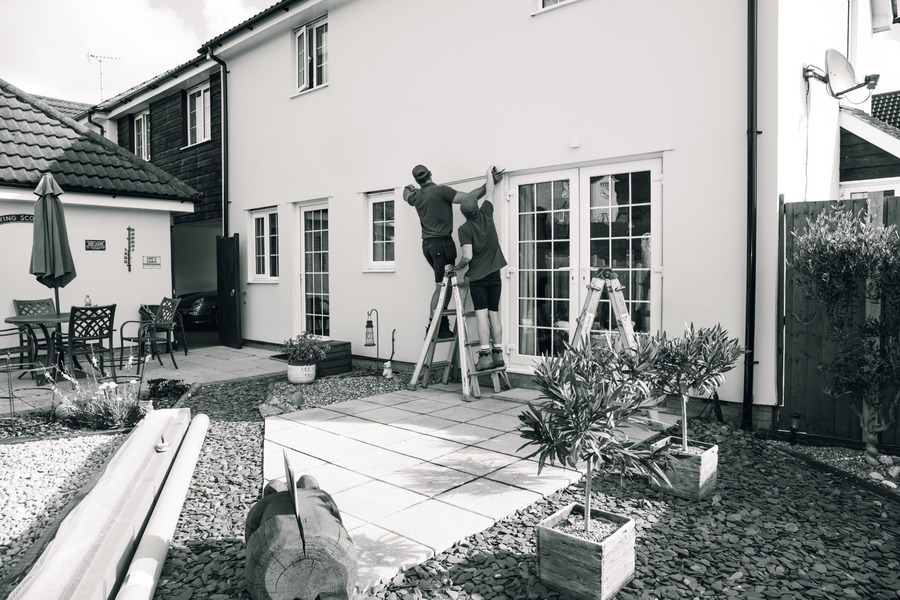
If you are planning a pergola from Caribbean, send a few photos of your garden along with rough measurements. That gives the survey team what they need to assess the space to give recommendations and indicative costs. A full site survey by our expert team can also be carried out prior to a formal quotation being issued for sign-off ahead of manufacture.
- To find out more about pergola installation, contact us here.